
College Window Cleaning Cambridge
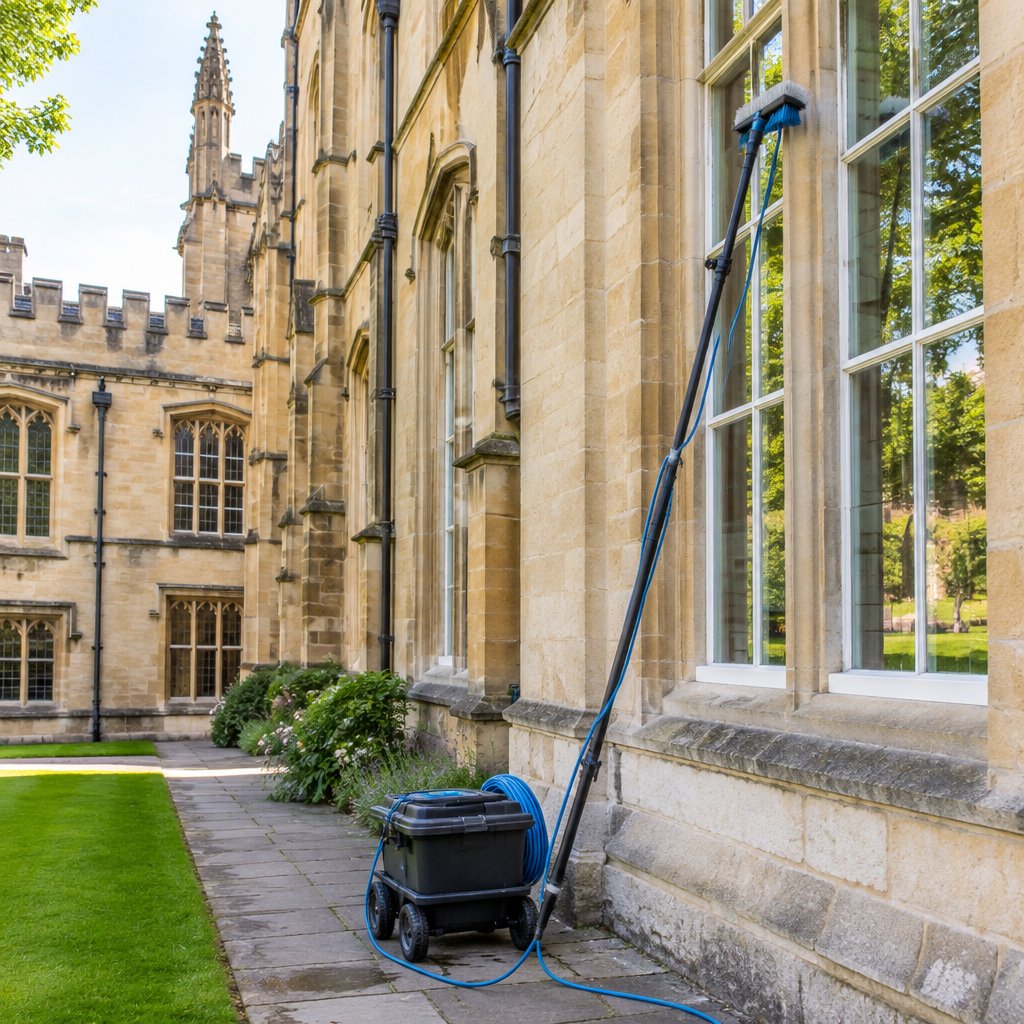
College buildings need more than a quick clean and a standard ladder. College window cleaning in Cambridge often involves busy entrances, student accommodation, teaching spaces, older glazing, high-level windows and several buildings on one site.
We also provide planned window cleaning for colleges and academic properties across Cambridge. Our approach therefore focuses on clean glass, sensible access and minimal disruption to daily college life.
From a single building to a wider college estate, every visit starts with the site itself.
Need a quote? Arrange a college window cleaning site survey in Cambridge.
Ready to Get Your Windows Cleaned Properly
Send us the property address and photographs of each elevation, then we will review the information and tell you whether a site survey is needed.
Professional Window Cleaning for Colleges in Cambridge
A college works differently from a normal office.Students move between buildings throughout the day. Staff also need clear access to teaching and administrative areas. Visitors may also arrive for tours, interviews, conferences or events.Window cleaning must fit around that activity.We plan work around the building layout, access points and daily use of each area.Every job starts with a clear assessment of the building.
Typical college locations may include:
Cambridge also presents a particular mix of buildings.
Related Window Cleaning Services
We also clean windows for schools and education buildings across Cambridge:
- University Window Cleaning Cambridge
- Nursery Window Cleaning Cambridge
- School Window Cleaning Cambridge
- Training Centre Window Cleaning Cambridge
More From Windows Cleaning Cambridge
- Residential window cleaning
- Commercial window cleaning
- Interior window cleaning
- Gutter cleaning
- Conservatory roof cleaning
- Fascia as well as soffit cleaning
- Solar panel cleaning
We cover the whole city as well as nearby villages, so see all the areas we cover.
Cleaning Around Students, Staff and Visitors
A window cleaner cannot treat a working college like an empty commercial unit like an office, because it is used differently.
Busy paths may also run directly below the windows. Entrances can also remain active for most of the day. Accommodation areas also need more privacy and care.
We plan each working area before cleaning starts.
Where needed, work can also move through the site in stages. This approach also keeps access clearer and reduces unnecessary disruption.
Particular attention should also go to:
- Main entrances
- Cycle routes
- Courtyards
- Student accommodation
- Delivery areas
- Fire exits
- Public footpaths
- Visitor routes
- High-footfall communal spaces
The aim is simple.
Clean the windows without getting in the way of the people using the college.
One-Off and Contract College Window Cleaning
Not every college needs the same cleaning frequency, so we tailor each plan.
Some sites need a one-off clean before an important date. In contrast, others need a planned programme throughout the year.
We can also structure cleaning around the needs of the property.
Common requirements include:
- One-off window cleaning
- Regular external window cleaning
- Periodic internal cleaning
- Termly programmes
- Holiday-period cleans
- Annual deep cleaning
- Multi-building contracts
- Pre-event cleaning
- Post-building-work cleaning
A clear schedule also helps facilities teams plan budgets and site access in advance.
Window Cleaning Across Your College Estate
College estates rarely consist of one type of building, so each part needs its own plan.
The cleaning method that works for a modern accommodation block may not suit an older courtyard window.
For that reason, each part of the site deserves individual attention.
Teaching Buildings
Teaching rooms need good natural light and presentable glazing, so clean glass matters.
External dirt can also build up gradually. Inside, fingerprints, dust and marks often appear around accessible windows and doors.
We can also plan cleaning around lectures, seminars and room bookings where required.
Student Accommodation
Residential blocks however, create different challenges.
Bedrooms require privacy. Shared kitchens and stairwells also receive heavy daily use. Upper floors may also need a different access method.
A planned schedule therefore reduces unnecessary disturbance.
Libraries and Study Areas
Libraries need quiet working conditions, so we work quietly.
Cleaning should therefore avoid creating avoidable noise around busy study periods.
Internal glass, entrance glazing and windows around reading areas may also need different cleaning times.
Dining Halls and Communal Spaces
Dining areas can also experience heavy footfall.
Windows near entrances and communal areas often show marks more quickly than less-used parts of the estate.
Scheduling work outside peak meal periods can also make the job easier for everyone.
Offices and Administration Buildings
College offices may also include bursarial, admissions, finance and estates teams.
Cleaning can also be arranged around office access and working hours.
Clear windows also help keep reception and administrative areas presentable for staff and visitors.
Entrances, Glass Doors and Reception Areas
Entrance glass creates a first impression before anyone reaches reception.
Fingerprints, rain marks and traffic film can also quickly make entrance glazing look tired, too.
Regular attention therefore to these areas can make a visible difference without requiring a full-building clean every time.
Atriums and High-Level Glazing
Modern academic buildings often also use larger areas of glass.
Atriums, rooflights and elevated windows also require proper access planning, too.
The safest practical method should therefore depend on the height, position and surrounding space.
Internal and External College Window Cleaning
A complete college window cleaning plan may cover both sides of the glass.
The exact scope should also always appear clearly in the quotation.
External Window Cleaning
External windows face Cambridge weather throughout the year, so they get dirty quickly.
Rain does not clean glass properly, because it carries dirt. It can also leave marks once water dries over existing dirt.
Other common problems include:
- Dust
- Traffic film
- Pollen
- Cobwebs
- Bird mess
- Organic debris
- Water spotting
- Marks from surrounding trees
- General atmospheric dirt
Buildings close to busy roads may need more frequent attention.
Tree-lined courtyards can also create a different cleaning pattern.
Internal Window Cleaning
Internal glass also collects different marks.
Fingerprints, dust and contact marks can also appear quickly in shared spaces, too.
High-use areas may need more frequent internal attention than offices or restricted rooms.
Internal cleaning can cover:
- Window glass
- Internal glazed screens
- Entrance doors
- Accessible glass panels
- Reception glazing
- Communal areas
Frames, Sills and Ledges
Facilities managers should also know exactly what a window cleaning quote covers.
Glass-only pricing may differ from a clean that also includes frames and sills.
Before approving a contract, confirm:
- Glass included
- Frames included
- Sills included
- Doors included
- Internal glazing included
- External glazing included
- High-level areas included
- Specialist access included
That small step prevents misunderstandings later.
Safe Access for High and Difficult College Windows
College buildings can also include windows above courtyards, entrances, pitched sections and restricted areas.
Access should therefore never rely on habit alone.
The Health and Safety Executive states that work at height must be properly planned. It also advises carrying out as much work as possible from ground level where practical.
The cleaning method should follow the building.
The building should not be forced to suit one cleaning method.
Water-Fed Pole Window Cleaning
Water-fed pole systems can also allow cleaners to reach many external windows from ground level.
That can also reduce the need to work at height.
They may suit:
- Multi-storey façades
- Accommodation blocks
- Teaching buildings
- Office windows
- Courtyard elevations
- Modern glazed areas
However, pole reach alone does not make every window suitable.
Access at ground level still matters.
Parked vehicles, narrow passages, trees, gates and pedestrian routes can all affect the plan.
Traditional Window Cleaning
Traditional methods remain useful for many accessible windows.
They can also work well for internal glazing and detailed cleaning at reachable levels.
A survey should determine where this method also makes sense.
High-Level and Restricted-Access Glazing
Some windows also need more planning.
The site may require specialist access equipment or another controlled method.
Factors include:
- Window height
- Ground conditions
- Building shape
- Roof design
- Courtyard width
- Pedestrian activity
- Vehicle access
- Nearby trees
- Fragile surfaces
- Restricted zones
Choosing the Right Access Method
The safest option may change from one elevation to another.
Ground-based methods should also take priority where practical. The HSE also advises selecting work equipment according to the assessed risk.
A good site survey should answer three questions:
- Where are the windows?
- What stands below them?
- What is the safest practical way to reach them?
That is more useful than promising one method for every building.
Window Cleaning for Historic Cambridge College Buildings
Historic Cambridge also needs careful treatment. The city centre also includes older college buildings, traditional courts and architectural features that form part of Cambridge’s character. Around King’s Parade and the historic centre, modern commercial cleaning methods may sit beside buildings that require a more considered approach. Historic glazing should never receive aggressive treatment simply because it looks dirty.
Care Around Older Window Frames and Architectural Features
Older windows may include:
- Timber frames
- Traditional glazing
- Painted surrounds
- Stonework
- Deep reveals
- Leaded sections
- Decorative features
- Hard-to-access openings
Cleaning teams should inspect these areas before deciding how to proceed. Age alone does not determine the method. Condition matters.
Traditional and Sensitive Glazing
Older glass may also behave differently from modern replacement glazing. The surrounding material can also affect how a window should be cleaned.
Before work starts, assess:
- Glass condition
- Frame condition
- Existing damage
- Loose material
- Access restrictions
- Nearby architectural features
If a window looks fragile or unusual, stop and assess it first. That simple rule can prevent costly mistakes.
Access Assessments for Older Buildings
Historic architecture can also create difficult access. Narrow courts, enclosed spaces and irregular façades may limit equipment use. The right solution should protect both the building and the people below.
College Window Cleaning Around the Academic Calendar
Cambridge has a clear academic rhythm. The University year includes Michaelmas, Lent and Easter Terms, while undergraduate Full Term teaching runs in concentrated eight-week periods. That also creates useful opportunities for facilities teams to schedule planned maintenance.
Term-Time Cleaning
Some cleaning still needs to happen while a college operates normally. For example, entrance glass may need attention more often than upper-floor external windows. A phased programme can also keep essential areas presentable without cleaning the whole site at once.
Holiday and Vacation Period Cleaning
Quieter periods can also suit larger cleans.
Facilities teams may use these windows for:
- Full external cleans
- Internal glazing
- Accommodation blocks
- Difficult-access areas
- Deep cleaning
- Multi-building work
However, Cambridge colleges do not become completely inactive outside Full Term. Postgraduate activity, conferences, visitors and staff work can continue. Always confirm actual building use before scheduling.
Before Open Days and College Events
Appearance matters more when visitor numbers rise. Cambridge runs University Open Days and college-focused events for prospective applicants. Annual events such as Open Cambridge also bring people into academic and heritage spaces across the city. That also makes pre-event cleaning a practical option.
Priority areas may include:
- Main entrances
- Reception glazing
- Front elevations
- Tour routes
- Courtyard windows
- Visitor facilities
- Dining spaces
Periodic and Annual Cleaning Programmes
There is no perfect cleaning frequency for every college. A building beside a busy road may need attention sooner than glazing inside a sheltered court. Trees also matter. So do birds, building orientation and visitor levels.
A sensible schedule should consider:
| Factor | Possible Effect on Frequency |
|---|---|
| Busy road nearby | Faster external dirt build-up |
| Mature trees | Pollen and sap, as well as organic debris |
| Heavy footfall | More marks on internal and entrance glass |
| Sheltered courtyard | Different weather exposure |
| Student accommodation | Higher daily use |
| Main public entrance | Greater presentation priority |
| Upper-level windows | May suit planned periodic cleaning |
| Events and open days | Extra cleaning before key dates |
Review the programme after the first few visits. Then adjust it using real site conditions.
Minimising Disruption Across Busy College Sites
Good commercial window cleaning involves more than clean glass. Timing matters. So does communication.
Scheduling Around Lectures and Teaching
Cleaning directly beside a teaching room at the wrong time can also cause avoidable disruption. Where possible, plan noisier or access-heavy work outside busy teaching periods. Facilities teams can also help identify sensitive areas.
Managing Pedestrian Routes
Cambridge colleges often depend heavily on walking and cycling. Central sites can also sit beside busy visitor routes. A cleaning plan should also consider the people moving below and around the work area. Temporary controls may be necessary where equipment also affects a route.
Working Around Accommodation Areas
Residential buildings also need more privacy. Residents should receive suitable notice where internal access is required. External cleaning may also need careful timing.
Early or Pre-Arranged Visits
Planned arrival times help estates teams manage gates, access points and restricted areas. They also reduce time lost when cleaners reach locked locations. Good access information improves efficiency before the first window is cleaned.
Health, Safety and Risk Management
Facilities teams should also never treat working at height as a minor detail. The Work at Height Regulations 2005 apply where a fall could cause personal injury. They also place responsibilities on people who control work carried out by contractors. Planning therefore matters on both sides of the contract.
Site-Specific Risk Assessment
A college site can change from one building to the next.
A useful assessment may consider:
- Working height
- Ground conditions
- Students
- Staff
- Visitors
- Vehicles
- Cycles
- Doors
- Steps
- Courtyards
- Fragile areas
- Restricted access
- Weather
- Equipment position
Generic paperwork should not replace looking at the actual site.
Working-at-Height Controls
Where possible, reduce the need to work at height. Ground-based equipment can also often help. Where that approach will not work, the contractor should choose a suitable alternative based on the assessment.
Safe Working Around Students and the Public
A college rarely stops operating for routine maintenance. Public safety therefore needs careful thought.
Areas below the work may need:
- Controlled access
- Temporary barriers
- Clear routes
- Staff coordination
- Equipment management
- Suitable timing
Insurance and Contractor Documentation
Procurement teams often need supporting documents before work starts. The exact requirements also vary by institution.
Documents to Confirm Before Work Starts
Depending on the contract, a college may request:
- Risk assessments
- Method statements
- Public liability insurance details
- COSHH information
- Training evidence
- Equipment inspection records
- Access documentation
- Contractor policies
A Practical Procurement Tip
Ask the facilities team for its contractor requirements early. This can also prevent paperwork delays after the quote has already been approved.
Useful Information to Exchange Before the Visit
Provide both sides with:
- Site contact
- Access instructions
- Working hours
- Restricted areas
- Parking information
- Key collection details
- Emergency contact
- Building priorities
Small details often save the most time.
Multi-Building College Window Cleaning
A large academic site works better with a plan. Cleaning everything in one order may not make operational sense. Instead, divide the site by building, priority or access type.
One Point of Contact for the Facilities Team
Clear communication also reduces confusion.
A facilities or estates contact can confirm:
- Access
- Cleaning priorities
- Changes to building use
- Events
- Complaints
- Reclean requests
- Future dates
The contractor should also provide a clear contact for service questions.
Building-by-Building Cleaning Schedules
A simple schedule might record:
| Building | Area | Cleaning Type | Access | Frequency |
|---|---|---|---|---|
| Teaching Block A | External windows | External | Ground-based system | Agreed schedule |
| Library | Internal glass | Internal | Standard access | Agreed schedule |
| Accommodation Block | External | External | Access assessment | Agreed schedule |
| Main Reception | Doors and entrance glass | Internal/external | Ground level | Higher frequency |
| Historic Wing | Selected windows | Specialist review | Site dependent | Planned separately |
This approach also helps teams see exactly what has been included.
Quality Checks After Cleaning
Inspection should also form part of a managed service. Problems are easier to resolve when the contractor and facilities team share a clear scope. Record difficult areas rather than ignoring them. That also helps improve the next visit.
Why Colleges Need Specialist Commercial Window Cleaning
A college also creates different demands from a small commercial property.
| Requirement | Standard Small Commercial Site | College or Academic Site |
|---|---|---|
| Buildings | Often one | May include several |
| Occupancy | Usually predictable | Students and staff, as well as visitors |
| Access | Often straightforward | Mixed and sometimes restricted |
| Glazing | Usually consistent | May include modern and older windows |
| Scheduling | Flexible | Academic calendar can affect timing |
| Pedestrian movement | Moderate | Can be heavy |
| Accommodation | Rare | Common |
| Historic features | Less common | Possible in Cambridge |
| Reporting | Usually simple | Facilities teams may need more detail |
| Cleaning programme | Often one frequency | May vary by building |
The difference is planning. A college window cleaning service should fit the estate rather than treat every window as identical.
College Window Cleaning Across Cambridge
Cambridge packs very different academic environments into a relatively compact city, so that makes local knowledge useful.
Central Cambridge and the Historic Core
Central college areas around King’s Parade, Trinity Street, Senate House and The Backs combine historic buildings with high levels of pedestrian and visitor activity. King’s Parade itself also sits beside some of Cambridge’s best-known college architecture. Cleaning work in busy central areas may also need more careful timing and access planning.
Sidgwick Avenue and West Cambridge
The academic landscape changes west of the historic centre. The Sidgwick Site houses faculties in Arts, Humanities and Social Sciences. It also includes listed buildings and sits within the West Cambridge Conservation Area. Nearby university and college properties can also include a mixture of post-war, modern and residential buildings. That mix reinforces the need to choose cleaning methods by building rather than postcode.
Eddington and North-West Cambridge
Eddington adds another type of academic environment. The area also includes university accommodation, education facilities, public spaces and newer development. Modern glazing can also create larger elevations and different access requirements from older central Cambridge buildings.
Wider Cambridge and Cambridgeshire
College and education properties also sit beyond the historic centre. Service coverage can also extend to surrounding Cambridge areas where agreed.
For other business properties, see our Commercial Window Cleaning Cambridge service. For education-specific work, you may also find our School Window Cleaning Cambridge and University Window Cleaning Cambridge pages useful.
Our College Window Cleaning Process
A clear process also makes procurement easier. It also reduces surprises once cleaning starts.
1. Initial Enquiry
Tell us what you need cleaned. Useful information also includes the site address, building count and preferred cleaning frequency.
2. Site Survey
We assess the property before planning complex work. The survey also helps identify difficult windows and access restrictions.
3. Access and Glazing Assessment
We also look at window height, condition and location. Older or unusual glazing may also need separate consideration.
4. Cleaning Schedule and Quotation
The quote should define the scope. It should also separate any optional work where required.
5. Risk and Access Planning
The cleaning plan should reflect the actual building and surrounding activity. Busy entrances and restricted areas also need particular attention.
6. Window Cleaning
Work follows the agreed schedule. Multi-building sites can also be completed in planned stages.
7. Inspection and Completion
Check the agreed areas after cleaning. Record any inaccessible or problem windows for the facilities team.