
Commercial Kitchen Window Cleaning Cambridge
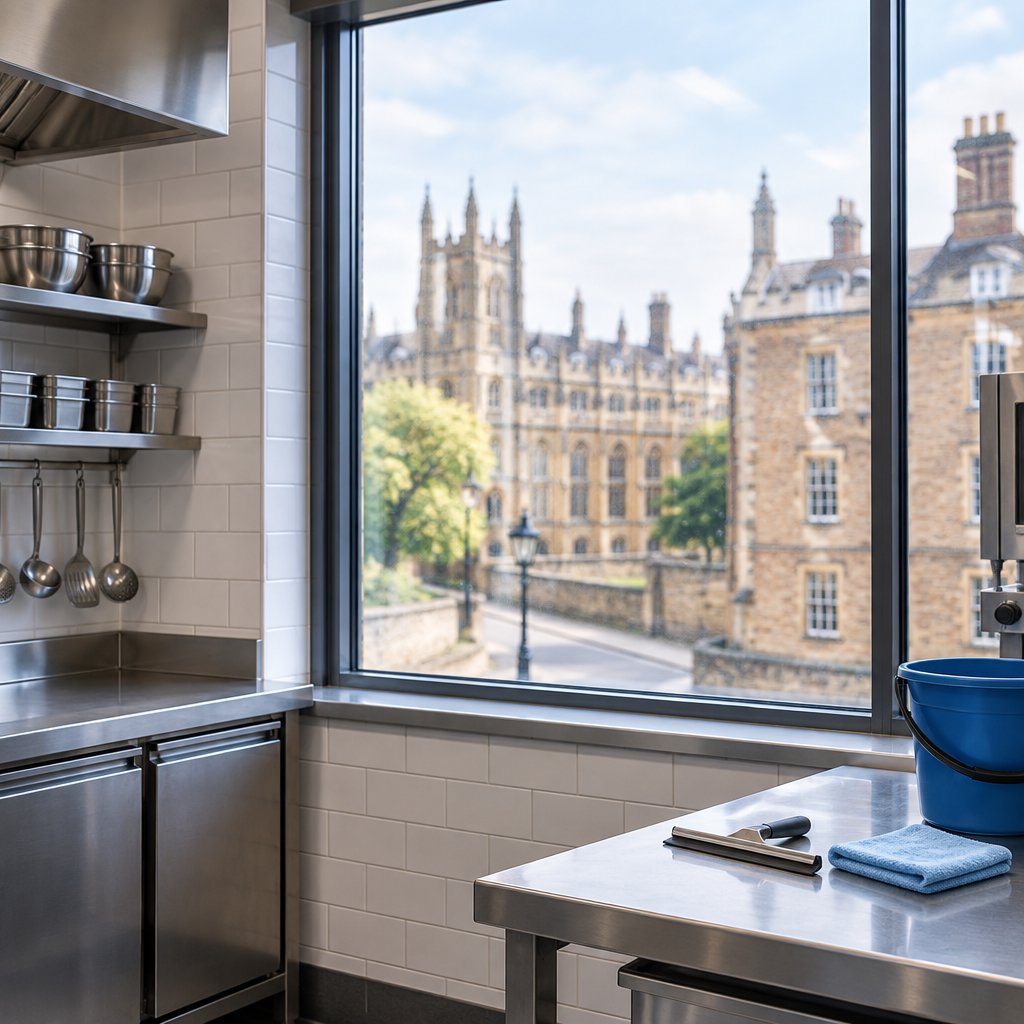
Commercial kitchens also create a different type of dirt on glass. Cooking vapour, grease, steam and fingerprints can also leave windows cloudy within days. Normal exterior dirt only adds to the problem.
Our commercial kitchen window cleaning in Cambridge focuses on these demanding food-service environments. We also clean kitchen glazing for restaurants, cafés, pubs, hotels, workplace canteens and other commercial premises across Cambridge.
Need a one-off clean before a busy period? Looking for regular window cleaning that fits around kitchen opening hours? We can also plan the work around your site and keep disruption to a minimum.
Ready to Get Your Windows Cleaned Properly
Send us the property address and photographs of each elevation, then we will review the information and tell you whether a site survey is needed.
Specialist Window Cleaning for Commercial Kitchens in Cambridge
A kitchen window does not face the same conditions as a normal office window. Heat rises. Steam settles. Cooking oils can travel through the air. Staff also touch glass doors, partitions and nearby glazing throughout a busy shift. Over time, those factors create dull glass, greasy edges and stubborn smears.
Fingerprints and High-Touch Glass
Not every kitchen window also sits high on a wall. Commercial kitchens can also include:
These surfaces pick up hand marks quickly. Regular attention also keeps them presentable and easier to maintain.
Related Window Cleaning Services
We also clean glass for restaurants, pubs, hotels and venues across Cambridge:
- Takeaway Window Cleaning Cambridge
- Cafe Window Cleaning Cambridge
- Bar Window Cleaning Cambridge
- Wedding Venue Window Cleaning Cambridge
- Event Venue Window Cleaning Cambridge
- Restaurant Window Cleaning Cambridge
- Coffee Shop Window Cleaning Cambridge
- Hotel Window Cleaning Cambridge
More From Windows Cleaning Cambridge
- Residential window cleaning
- Commercial window cleaning
- Interior window cleaning
- Gutter cleaning
- Conservatory roof cleaning
- Fascia as well as soffit cleaning
- Solar panel cleaning
We cover the whole city as well as nearby villages, so see all the areas we cover.
Grease and Airborne Cooking Residue
Grease does not always appear as thick dirt. It often starts as a light film. That film catches dust and makes the glass look hazy. Another quick wipe can then spread the grease rather than remove it.
Busy kitchens can also build this film faster. Frying, grilling and cooking oils increase airborne residue. Ventilation helps control heat, odours and airborne particles, but surrounding surfaces can still need regular cleaning. Cambridge City Council’s food-hygiene guidance highlights the importance of kitchen ventilation in reducing humidity, cooking odours and airborne particles. Windows close to cooking and preparation areas deserve the same practical attention.
Steam, Condensation and Water Marks
Steam creates another common problem. Warm kitchen air reaches cooler glass and condensation forms. Repeated condensation can also leave streaks or mineral marks. It can also make existing grease more noticeable. A window may therefore look dirty even when staff clean it regularly. Removing the underlying film also gives routine cleaning a better starting point.
Fingerprints and High-Touch Glass
Not every kitchen window also sits high on a wall. Commercial kitchens can also include:
- Glass entrance doors
- Internal glazed doors
- Serving-area glass
- Window panels
- Internal partitions
- Low-level glazing
- Glass beside staff entrances
These surfaces pick up hand marks quickly. In addition, regular attention keeps them presentable and easier to maintain.
Frames, Sills and Window Ledges
Clean glass can still look poor beside a dirty frame. Dust, grease and debris often collect along window edges and sills. That build-up becomes more obvious in food-service spaces with light-coloured surfaces. Where agreed as part of the service, frames and accessible sills can receive attention alongside the glazing, so this gives the whole window area a cleaner finish.
Internal and External Kitchen Glazing
Some sites only also need internal kitchen windows cleaned. Others also need both sides. We also look at the location, access and level of build-up before deciding on the best approach. The aim stays simple. Clean the required glass properly without getting in the way of kitchen operations.
What We Clean in Commercial Kitchen Areas
Every site has a different layout. A compact café kitchen near Mill Road may also have one or two accessible windows. A hotel, college or large catering facility may have several elevations and high-level glazing.
The service can cover relevant areas such as:
- Internal kitchen windows
- External commercial windows
- Window frames
- Window sills
- Window ledges
- Glass doors
- Glazed staff entrances
- Internal glass partitions
- Serving-area glazing
- High-level windows
- Hard-to-reach commercial glazing
We also confirm the required areas before work begins. That also prevents confusion on the day.
Internal Kitchen Window Cleaning
Internal glass needs careful planning. Kitchen equipment, preparation surfaces and staff movement can also restrict access. We first identify where the windows sit. Then we plan a sensible working area around them.
If a kitchen remains active, the site contact can also help us choose a suitable time. For some businesses, an early visit also works best. Others prefer cleaning between service periods or after food preparation has finished.
Exterior Commercial Kitchen Window Cleaning
The outside surface gets different dirt. Rain marks, road film, dust, cobwebs, pollen and bird deposits can also reduce clarity. Locations close to busy Cambridge roads may also need more frequent attention. Hills Road, Newmarket Road and areas around Cambridge railway station can see constant traffic and pedestrian movement. A regular schedule also helps stop exterior build-up becoming a bigger job.
High and Difficult-to-Reach Kitchen Windows
Access can change the entire job. Some kitchen windows also sit above extensions, service yards or loading areas. Others may sit several metres above ground. We also assess the safest practical approach before cleaning. Where suitable, cleaning from ground level can also reduce unnecessary work at height.
The Health and Safety Executive specifically advises window cleaners to avoid work at height where reasonably practicable. It also gives telescopic water-fed poles and cleaning from inside as examples.
Removing Grease Film From Commercial Kitchen Glass
Grease is one of the main reasons kitchen glass needs specialist attention. A general window clean may also remove dust. It may also not deal with a stubborn oily layer underneath.
Why Kitchen Glass Gets Greasy Faster
Cooking produces more than visible steam. Tiny particles can move through the kitchen air. Some settle on nearby surfaces. Glass often shows the result clearly because light exposes every smear.
The problem can become worse around:
- Frying areas
- Grills
- Cooking lines
- Busy preparation zones
- Staff doors
- Poorly ventilated corners
- Frequently opened kitchen windows
The closer the glass also sits to active cooking, the faster residue may return.
Why Ordinary Glass Wiping Can Leave Smears
Greasy glass also needs the right preparation. A cloth can spread oil across the surface if too much residue remains. That also creates curved wipe marks and cloudy patches. Adding more product does not always solve the problem. First, the grease also needs to break down. Then the glass can receive its finishing clean. This two-stage thinking matters in busy commercial kitchens.
Cleaning Without Leaving Heavy Residue
Commercial kitchens also need practical cleaning methods. The process should not create another problem around food preparation. We consider where the glass sits before starting. Nearby worktops, equipment and active preparation areas also need suitable care. The site manager should also tell us about any access rules or restricted zones. Good communication also makes the work simpler.
Window Cleaning Around Active Food Preparation Areas
A restaurant cannot close its kitchen every time the windows need attention, so that makes scheduling important. A good commercial cleaning plan works around the business. It should not force the business to work around the cleaner.
Working Around Kitchen Opening Hours
Cambridge food businesses operate on very different schedules. A breakfast café may also start early. A restaurant may prepare food throughout the afternoon. Hotels can serve guests from breakfast until late evening. Staff canteens often have short but intense service periods. We therefore arrange access around the quieter window available at each site.
Possible options can include:
- Before opening
- After service
- Between meal periods
- During a scheduled closure
- On a quieter trading day
- During planned maintenance
Furthermore, the right time depends on the business.
Protecting Food Preparation Areas During Cleaning
Window cleaning should never interfere with safe food handling. Before starting inside a kitchen, we identify the working area and nearby surfaces. The kitchen manager can then confirm what needs moving, covering or avoiding.
Cambridge City Council places clear importance on cleanliness in food preparation areas. Its guidance also notes that poor structural cleanliness in kitchens or preparation rooms can lead to environmental-health concerns. Window cleaning forms only one small part of overall kitchen maintenance. It does not guarantee a food hygiene rating. However, keeping the premises properly maintained supports a cleaner working environment.
Preventing Unnecessary Disruption
Commercial cleaning becomes frustrating when contractors block doors or interfere with staff. Planning avoids most of these problems. We identify access points first. Then we work through the agreed area in a logical order. Kitchen teams can also continue with their own schedule wherever conditions allow.
Commercial Kitchen Window Cleaning for Cambridge Food Businesses
Cambridge has a varied food and hospitality sector. The right cleaning approach also depends on the type of site. A compact takeaway does not operate like a hotel kitchen. A university catering facility has different access also needs from a pub.
Restaurant Window Cleaning Cambridge
Restaurants can produce heavy cooking vapour during long service periods. Internal kitchen windows may show greasy film quickly. Front and external windows also affect how the premises looks from the street. Regular cleaning can cover the relevant kitchen glazing alongside other agreed commercial windows.
Café and Coffee Shop Kitchen Windows
Cafés often work within smaller spaces. Steam, fingerprints and food preparation can therefore sit close to the glazing. This can also make marks more visible. Businesses around Mill Road, Regent Street and the city centre may also deal with high pedestrian traffic throughout the day. Short, planned cleaning visits also suit these environments well.
Pub and Bar Kitchen Windows
Pubs often combine customer areas, kitchens and service entrances within one building. Access can become difficult during deliveries or food service. Scheduling the window clean around those periods also helps reduce disruption.
Hotel Kitchen Window Cleaning
Hotel kitchens may operate for much of the day. Breakfast can start early. Lunch, afternoon service and dinner may follow. A planned window-cleaning schedule also gives the kitchen team a predictable maintenance window.
School and College Catering Facilities
Education kitchens can have busy term-time schedules. However, they may also offer useful cleaning windows outside main meal periods. Some sites prefer planned work during quieter days or holiday periods. Access procedures also matter on education premises.
University Catering Kitchens
Cambridge has an unusually large concentration of colleges, university buildings and catering facilities. These sites can include older buildings, enclosed courtyards and restricted service areas, so that makes access planning important. We assess the actual windows rather than assuming every building needs the same method.
Care Home and Healthcare Catering Areas
Catering areas in care settings often operate to strict routines. Cleaning work also needs to fit around staff movement, meal preparation and site controls. A clear plan before the visit reduces disruption.
Staff Canteens and Workplace Kitchens
Cambridge also has large employment areas outside the historic centre. The Cambridge Science Park, Cambridge North area and business campuses support a large working population. Canteens, cafés and staff kitchens in these environments can benefit from planned commercial window maintenance.
Why Clean Kitchen Windows Matter
Kitchen windows do more than provide a view. Their condition also affects light, presentation and day-to-day maintenance.
Better Natural Light
Grease film reduces clarity. Dust and marks can also make the problem worse. Cleaner glass allows available daylight to pass through more clearly. That matters in kitchens where natural light already feels limited.
Easier Routine Maintenance
Light dirt is easier to manage than months of build-up. A regular professional clean removes accumulated residue before it becomes harder to shift. Staff can then deal with fresh fingerprints and minor marks between visits.
Preventing Heavy Grease Build-Up
Grease tends to attract more dirt. The longer it remains, the duller the glass can also look. A planned cleaning frequency also helps break that cycle.
A Better-Looking Working Environment
Staff notice the condition of the space around them. So do managers, contractors and visitors. Clean glazing forms part of a well-kept commercial environment. It does not replace deep kitchen cleaning. It complements it.
Commercial Window Cleaning That Fits Your Kitchen Schedule
No two Cambridge kitchens also need the same frequency. Cooking volume matters. So does the location of the window. Ventilation, opening hours and external exposure also affect how quickly dirt returns.
One-Off Kitchen Window Cleaning
A one-off visit can work well when glazing has fallen behind.
It may also suit:
- A new business opening
- A refurbishment
- An end-of-tenancy clean
- A change of operator
- A deep-clean programme
- A pre-inspection tidy-up
- A seasonal refresh
- A reopening after building work
In addition, the first clean gives us a clear view of the actual maintenance requirement.
Regular Scheduled Cleaning
Busy kitchens usually benefit more from planned maintenance. Regular cleaning also prevents the same heavy build-up returning. It also makes budgeting easier. A schedule may include internal glass, external windows or both.
Weekly, Fortnightly or Periodic Cleaning
Frequency should follow the site. A heavily used restaurant kitchen may need closer attention than a small staff canteen. We do not recommend an interval simply because it fits a standard package. Instead, we consider the conditions.
| Kitchen environment | Common glass problem | Practical cleaning approach |
|---|---|---|
| Busy restaurant | Grease and steam, as well as fingerprints | Frequent planned maintenance |
| Café | Condensation and hand marks | Routine scheduled cleaning |
| Pub kitchen | Grease plus external grime | Internal and external programme |
| Hotel kitchen | Long operating hours | Planned low-disruption visits |
| School kitchen | Term-time food preparation | Scheduled periodic cleaning |
| Staff canteen | Daily moderate use | Regular maintenance |
| Catering facility | Multiple windows and access points | Site-based cleaning plan |
Choosing the Right Cleaning Frequency
Look at the glass after a normal working week. Does a greasy haze already show? Are staff wiping it every day? Does condensation also leave visible marks? If yes, a shorter interval may save time. A quieter kitchen may need far less frequent professional attention.
Our Commercial Kitchen Window Cleaning Process
A clear process also makes commercial cleaning easier to manage. You know what happens. Your team knows when we also need access.
1. Tell Us About the Site
Start with the basics. We need to know the type of premises, location and approximate number of windows. Photos can also help explain the access.
2. Assess the Windows and Access
Next, we look at height, position and surrounding obstacles. A ground-floor café window also needs a different plan from high glazing above a service yard.
3. Check the Level of Build-Up
Grease changes the job. So does old residue, construction dust or neglected exterior dirt. We also assess what the glass actually needs.
4. Plan Around Kitchen Operations
The cleaning time should suit the site. We also agree access before the visit. This reduces delays.
5. Clean the Agreed Glass
We work through the identified areas. Frames and sills can also be included where agreed.
6. Check the Finish
Good commercial work also needs a final check. We also look for remaining marks, missed edges and obvious smears.
7. Set a Sensible Maintenance Interval
After seeing how the site behaves, we can discuss future cleaning. Some businesses also need regular visits. Others only need occasional work.
Site Preparation Before the Visit
A few simple steps can also make the clean faster. Keep the route to the windows clear where possible. Tell us about locked areas or staff-only entrances.
Information Your Kitchen Manager Can Provide
Access details save time. So does knowing when cooking starts.
Useful Details to Send With Your Enquiry
Include:
- Cambridge postcode
- Business type
- Number of windows
- Internal as well as external cleaning
- Ground-floor or high-level access
- Photos where possible
- Preferred cleaning time
- One-off or regular requirement
That information helps us understand the job before arrival.
Safe Window Cleaning for Cambridge Commercial Premises
Safety matters on every commercial site, especially busy ones. Kitchen environments add extra movement, equipment and restricted areas. Access needs proper thought.
Site-Specific Risk Assessment
A site assessment identifies obvious hazards.
These can include:
- Slippery areas
- Vehicle movements
- Delivery routes
- Hot equipment
- Restricted zones
- High windows
- Pedestrian access
- Narrow service yards
The cleaning method should match those conditions.
RAMS Where Required
Some commercial sites request formal risk assessments and method statements. Facilities teams often use these documents to coordinate contractors. Requirements should be discussed before the job.
Water-Fed Pole Window Cleaning
Ground-based systems can also help with suitable external windows. They also reduce the need to work directly at height. The HSE advises businesses to avoid work at height where reasonably practicable and lists telescopic water-fed poles as one possible approach. The building still needs assessment. One method will not suit every window.
Working at Height
High windows require more than a long ladder and good intentions. Access must suit the task. The HSE states that work at height should be properly planned, supervised and carried out by competent people using suitable equipment. That principle guides sensible commercial window cleaning.
Cleaning Products and COSHH
Commercial cleaning products also need correct handling. The chosen method should also suit the environment. A kitchen manager should tell the cleaning team about site-specific restrictions before work starts. This is especially important close to food preparation.
Commercial Kitchen Window Cleaning Across Cambridge
Cambridge may be compact, but its commercial areas vary sharply. Access around Market Square differs from access at Cambridge Science Park. A restaurant on Mill Road has also different pressures from a kitchen near the Biomedical Campus. Local knowledge also makes scheduling easier.
Cambridge City Centre
The historic centre contains restaurants, cafés, pubs, hotels and food traders within busy pedestrian streets. Commercial access can also be tight. Delivery periods matter. So do customers.
Cambridge Market at Market Hill operates seven days a week and includes street-food and food traders, so that gives a useful picture of how active the city’s central food economy remains throughout the week. For nearby premises, early or carefully planned visits can also make window cleaning much easier.
Market Square and the Civic Quarter
Market Square sits close to the Guildhall, Corn Exchange, Market Street and surrounding hospitality businesses. These areas see steady foot traffic. Service access also competes with deliveries, traders and public activity. A commercial window cleaner also needs to think about timing, not only the glass.
Mill Road and Petersfield
Mill Road has one of Cambridge’s best-known mixes of independent food businesses. Restaurants, cafés and takeaways sit close together along the route. Many occupy converted properties rather than modern commercial units. That can also create awkward window positions, narrow access and limited service space. A site-specific approach works better than a fixed cleaning method.
Regent Street and Hills Road
Regent Street connects the city centre with Hills Road and the station area. Hotels, restaurants, cafés and commercial premises line this busy route. Road exposure can also increase exterior dirt. In addition, regular external cleaning helps keep roadside glazing under control.
Cambridge Station and CB1
CB1 has developed into a major mixed commercial area around Cambridge railway station. Its own business directory lists restaurants, cafés, bars and food outlets across the development. Food-service premises here can combine modern glazing with busy commuter footfall. Planned early access often makes more sense than working through peak periods.
Newmarket Road
Newmarket Road combines retail, leisure and food premises. Traffic remains a constant factor. Exterior glass can also collect road grime faster in exposed positions. Sites with rear service areas may also require separate access planning.
Chesterton and Cambridge North
Cambridge North connects offices, housing and commercial activity. Nearby business sites can include staff kitchens, cafés and catering areas. Regular contract cleaning can work well where facilities teams manage several services together.
Cambridge Science Park
Cambridge Science Park has a large daytime working population. Staff cafés, kitchens and hospitality spaces support those workplaces. Commercial window cleaning here often needs to fit formal contractor procedures. Clear access arrangements help the job run smoothly.
Cherry Hinton
Cherry Hinton contains local pubs, restaurants, cafés and community-serving businesses. Sites here may have simpler access than the city centre. However, every building still needs its own assessment.
Trumpington
Trumpington has grown quickly. New housing sits alongside hotels, restaurants, workplaces and the route towards Addenbrooke’s. Modern buildings can include larger glazed areas. That can also change both cleaning time and access requirements.
Cambridge Biomedical Campus Area
The Biomedical Campus is one of Cambridge’s major employment areas. Large sites can have staff catering, cafés and commercial food facilities. Contractor access may require more planning than a small independent restaurant. We also recommend discussing security, parking and working times before the visit.
A Practical Local Point for Cambridge Hospitality Businesses
Cambridge stays busy well beyond ordinary office hours. The city’s official tourism service promotes food, drink and events throughout the year. That matters for hospitality maintenance. A restaurant cannot always sacrifice its busiest period for cleaning. Neither can a hotel kitchen stop preparing breakfast because a contractor has arrived.
The cleaning schedule should follow the business rhythm. That simple principle often makes the difference between a useful service and an inconvenient one.
Commercial Kitchen Window Cleaning and Food Hygiene
Clean windows do not replace a proper food-safety system. They do also not guarantee a Food Hygiene Rating Scheme score. That distinction matters.
Cambridge City Council requires food businesses to manage food safety properly. Its guidance describes effective cleaning as one part of good hygiene practice. Window cleaning supports the general upkeep of the premises. Kitchen management still needs to cover equipment, preparation surfaces, floors, storage, ventilation and food-handling controls.
Open Kitchen Windows and Pest Control
Some commercial kitchens open windows for ventilation. That also creates another consideration. Cambridge City Council’s food-hygiene guidance notes that windows kept open should receive adequate pest proofing. A cleaner should avoid damaging screens, seals or fittings around these windows. Tell us about any fly screens before work begins.
Commercial Kitchen Window Cleaning Cost in Cambridge
There is no useful single price for every kitchen. A two-window café and a large catering site involve different amounts of work. Access can also make an even bigger difference. We base the job on the actual site.
What Affects the Price?
The main factors include:
| Pricing factor | Why it matters |
|---|---|
| Number of windows | More glass takes more time |
| Window size | Large panes increase cleaning area |
| Internal or external | Both sides require more work |
| Grease level | Heavy residue can need extra preparation |
| Window height | High glass can require a different method |
| Access | Restricted areas can increase working time |
| Frames and sills | Extra surfaces add to the job |
| Cleaning frequency | Maintained glass is often quicker to clean |
| Working hours | Special access times can affect planning |
| Parking and loading | Central Cambridge access can affect logistics |
What Should a Quote Include?
A useful quote should make the scope clear.
You should know:
- Which windows are included
- Whether both sides are included
- Whether frames and sills are included
- How often the work will take place
- What access arrangements apply
- Whether the quote covers one visit or ongoing cleaning
Clear scope prevents surprises later.
Can You Quote From Photos?
Photos can also help with straightforward jobs. They show window size, height and visible access. Complex sites may still need a closer assessment. For the best starting point, send wide shots as well as close-ups of the glass.
Commercial Kitchen Window Cleaning vs General Window Cleaning
Kitchen glazing deserves its own service because the dirt and working environment differ.
| General commercial window | Commercial kitchen window |
|---|---|
| Rain and dust | Grease and cooking vapour |
| General fingerprints | Frequent staff contact |
| Normal condensation | Heavy steam and humidity |
| Standard access | Access around food operations |
| Typical business hours | Cleaning around kitchen service |
| Exterior pollution | Internal grease plus exterior dirt |
| General maintenance | More frequent residue management |
The difference is practical. It is not just a different service name. A kitchen window cleaner needs to think about grease, food preparation, access and operating times together.
Why Cambridge Businesses Use a Regular Window Cleaning Plan
Waiting until glass looks very dirty usually creates more work. A simple maintenance schedule prevents that. Regular visits can offer several practical benefits.
Less Heavy Build-Up
Grease has less time to accumulate. Exterior dirt also stays under control.
More Predictable Costs
A set schedule makes maintenance easier to budget. Facilities managers also know when the next visit will happen.
Easier Access Planning
Repeated visits create a routine. The cleaning team learns where to enter and when the kitchen is quieter. That can also make future visits more efficient.
A Consistent Standard
One very deep clean followed by months of neglect creates a cycle. Regular attention keeps the window area at a steadier standard.
Why Choose a Specialist Commercial Service?
Commercial kitchens need more than someone who can clean glass. They need a contractor who understands working premises, so that means arriving with a clear scope. It also means respecting staff, access routes and operating times.
A reliable service should offer:
- Clear communication
- Sensible scheduling
- Site-aware working methods
- Commercial cleaning experience
- Straightforward quotations
- Consistent standards
- Safe access planning
- Regular or one-off options
Evidence matters more than slogans. Before choosing a contractor, check real reviews, insurance information, project photos and commercial experience. Ask questions if something is unclear.