
Research Facility Window Cleaning Cambridge
Research facilities need more than a quick clean and a convenient time slot. They need careful access planning, reliable scheduling and a cleaning method that works around people, security and active operations.
Windows Cleaning Cambridge provides research facility window cleaning in Cambridge for laboratories, R&D buildings, technology centres, life science premises and research offices. We also use a pure-water Reach & Wash system for suitable external glazing. This also allows us to clean many windows safely from ground level. We also provide internal window cleaning where access allows. Our team has more than 10 years of cleaning experience. We also carry full public liability insurance and carry out risk assessments before work where required.
Need a quote?
Send us the site postcode, building details and clear photographs of each elevation. We can then assess the likely scope and advise whether more information is needed.
Ready to Get Your Windows Cleaned Properly
Send us the property address and photographs of each elevation, then we will review the information and tell you whether a site survey is needed.
Specialist Window Cleaning for Cambridge Research and R&D Facilities
Cambridge has one of the UK’s strongest concentrations of scientific, medical and technology research. That also creates very different window cleaning requirements from a standard house or small shop. Research sites may also contain laboratories, offices, meeting spaces, secure areas, plant rooms, workshops and large glazed entrances within the same building. Some sites also operate across several buildings. We plan the cleaning scope around the property rather than applying one method to every window.
Multi-Building Research Campuses
This also allows us to choose a practical method and provide an accurate quotation.
Related Window Cleaning Services
We also clean windows for science, industrial and logistics sites around Cambridge:
- Warehouse Window Cleaning Cambridge
- Workshop Window Cleaning Cambridge
- Manufacturing Facility Window Cleaning Cambridge
- Factory Window Cleaning Cambridge
- Industrial Estate Window Cleaning Cambridge
- Food Processing Facility Window Cleaning Cambridge
- Laboratory Window Cleaning Cambridge
- Storage Facility Window Cleaning Cambridge
More From Windows Cleaning Cambridge
- Residential window cleaning
- Commercial window cleaning
- Interior window cleaning
- Gutter cleaning
- Conservatory roof cleaning
- Fascia as well as soffit cleaning
- Solar panel cleaning
We cover the whole city as well as nearby villages, so see all the areas we cover.
Laboratory and Life Science Facilities
Laboratory buildings often operate throughout the working day. Cleaners may need to work around staff movements, deliveries, restricted doors and controlled spaces. We also agree access before the visit. We do not assume that every internal area will be available. In addition, this approach works well for life science and laboratory properties around Cambridge Biomedical Campus, Babraham and the wider Cambridge research cluster.
Cambridge Biomedical Campus brings biomedical research, healthcare and education together on one major site. It includes research institutions, hospitals and specialist scientific facilities.
Technology and Engineering Research Centres
Technology buildings often combine offices with technical spaces. Their glazing can also include tall entrance screens, upper-storey windows, courtyard glass and internal partitions. Cambridge Science Park provides a clear local example. Its tenant directory also includes organisations working across technology, biotechnology, medical research, engineering and life sciences. Cleaning plans for these properties should account for much more than the number of windows. Access and daily building use matter just as much.
Pharmaceutical and Biotechnology Facilities
Biotechnology and pharmaceutical buildings may also operate under tighter access controls. Contractors may need to use designated entrances or follow site instructions before starting work. We can plan the cleaning sequence with the facilities contact, so that helps keep cleaners away from areas that have not been approved for access.
University and Academic Research Buildings
Cambridge also contains major academic research facilities. Cambridge West also includes specialist research buildings in physics, engineering, computing and related scientific fields. The University describes the area as a major centre for research, innovation and commercialisation. Buildings of this type can contain several glazing styles within one elevation. A visual assessment helps identify the best approach before cleaning starts.
Multi-Building Research Campuses
A research campus creates another challenge. One contract may also cover several buildings with different heights, window types and access conditions. A building-by-building specification works better than a vague site-wide instruction. It tells everyone:
- which buildings are included;
- which elevations will be cleaned;
- whether frames and sills form part of the scope;
- whether internal glass is included;
- which areas also need access permission;
- how often each building will be visited;
- and which windows need further assessment.
That clarity also helps facilities managers compare quotations and manage future visits.
Why Research Facilities Need a Specialist Window Cleaning Approach
A research facility can stay operational while window cleaning takes place. However, the work needs planning. The safest method for one elevation may not suit the next.
Working Around Active Research Operations
Research does not stop because the windows need cleaning. Our approach starts with the building schedule and access conditions. We can also agree which areas should be cleaned first. We can also identify busy entrances, delivery routes and work zones that need extra care. This also reduces unnecessary contact with staff and limits disruption.
Controlled and Restricted Access Areas
A cleaner should also never treat a research building like an unrestricted office. Some doors may require staff access. Other areas may only also allow approved contractors. Internal cleaning may also need a local contact. Before work starts, tell us about:
- security reception procedures;
- contractor sign-in rules;
- access cards or keys;
- restricted rooms;
- delivery periods;
- staff-only corridors;
- secure courtyards;
- and areas that must remain clear.
We can also plan around those requirements.
Complex Buildings and Difficult Glazing
Modern research buildings often use glass as a major part of their design. That can also create impressive entrances and bright working areas. It can also create awkward cleaning angles. Common issues also include recessed windows, projecting sections, roof overhangs, narrow courtyards and glazing above entrances. We also assess these features before choosing the cleaning method. We never assume that a window can be reached safely simply because it looks close from ground level.
Keeping Disruption Low
Researchers also need to work. Visitors need to enter. Deliveries need to arrive. Facilities staff may also already have several contractors working on site. We also plan the cleaning sequence around those conditions. Where possible, we start with quieter elevations and avoid blocking important access points.
Our Research Facility Window Cleaning Services
The exact service also depends on your building. We define the scope before work starts.
External Research Facility Window Cleaning
External glazing carries the greatest exposure to weather and airborne dirt. Pollen, dust, road grime and mineral deposits can also all reduce clarity. Our pure-water system cleans suitable external glass without leaving the mineral residue associated with ordinary tap water. Furthermore, we can include reachable frames, sills and ledges in the agreed scope.
Internal Window Cleaning
Research offices, reception areas and meeting rooms can also need internal cleaning. Fingerprints and marks also show quickly on entrance doors and internal glazing. We also provide internal window cleaning for homes and businesses as part of our existing Cambridge service. For research facilities, we agree the rooms and access arrangements before arrival.
Entrance and Reception Glass
Reception glass creates one of the first visual impressions of a research organisation. It can also become dirty faster than upper windows. Visitors touch doors. Deliveries increase traffic. Rain marks also lower external panels. A split schedule can also work well here. For example, reception glass can receive more frequent attention while upper external windows follow a longer cycle.
Internal Glass Partitions and Glazed Doors
Modern research offices often use glass partitions to create lighter workspaces. These also surfaces collect fingerprints quickly. Internal partitions can also be added where they form part of the agreed cleaning scope.
One-Off Window Cleaning
Not every site needs a regular contract. A one-off clean, however, may suit:
- a new building handover;
- a facilities inspection;
- an important stakeholder visit;
- an office or laboratory refurbishment;
- a company event;
- a research conference;
- an open day;
- or a long gap between scheduled cleans.
Cambridge also has a strong public research calendar. The annual Cambridge Festival also brings research talks, exhibitions and events to audiences across the city. Research organisations preparing for public-facing activity may want presentation areas checked before visitors arrive.
Planned Window Cleaning Contracts
Regular cleaning helps prevent heavy build-up. It also makes budgeting easier. A planned schedule can define the months of service, buildings included and cleaning frequency. Facilities teams then know what to expect before each visit.
How We Clean Research Facility Windows
We choose the method after reviewing the building. Safety comes first.
Site Survey and Access Assessment
A straightforward building may only need clear photographs and basic site information. A more complex facility may need closer assessment.
What We Check
We may review:
- building height;
- window position;
- surrounding ground;
- recessed glazing;
- pedestrian routes;
- vehicle movements;
- entrance activity;
- courtyards;
- landscaping;
- overhangs;
- security restrictions;
- and internal access.
We then identify which windows suit our normal cleaning system.
Ground-Based Pure-Water Cleaning
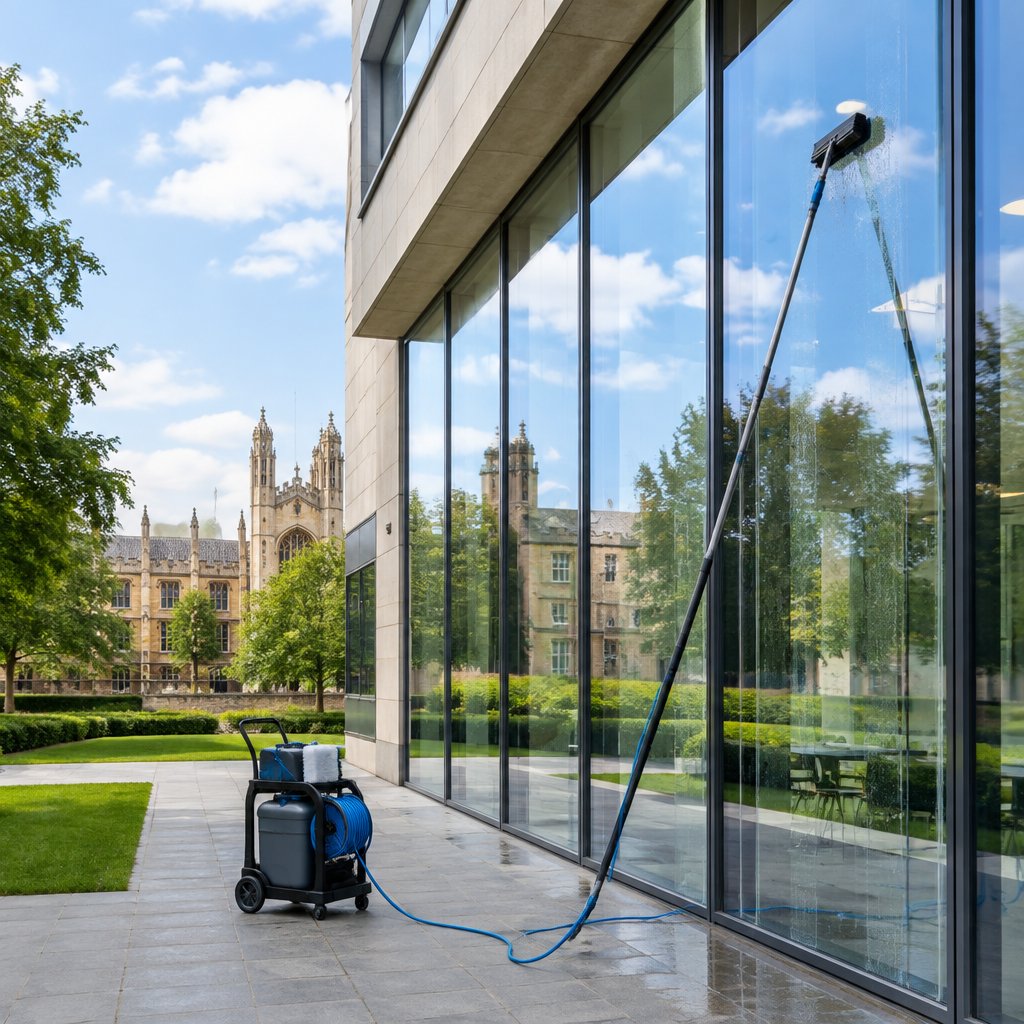
Where the building allows, our Reach & Wash system can clean external windows from ground level. A long-reach pole carries purified water to the brush. The brush loosens dirt from the surface. Purified water then rinses the glass. Because the water contains very low levels of dissolved minerals, the glass can dry without the spotting often associated with normal hard tap water. This method also reduces the need to position a cleaner at height. The Health and Safety Executive states that work at height should be avoided where reasonably practicable. It specifically identifies telescopic water-fed poles as one way to achieve this.
Internal Cleaning
Some windows work better from inside. We assess access before starting. Sensitive work areas remain outside the scope unless the site contact has approved entry.
Windows That Need Different Access
Not every research building suits a water-fed pole. Deep recesses, structural features or inaccessible elevations can prevent a safe cleaning angle. If we cannot safely reach an area using the agreed method, we identify the issue before proceeding. We do not improvise unsafe access on the day.
Information to Send Before We Quote
A useful enquiry includes:
- full Cambridge address;
- postcode;
- number of buildings;
- approximate number of floors;
- photographs of each elevation;
- internal or external requirements;
- preferred frequency;
- restricted access details;
- parking information;
- and your preferred start period.
Helpful Photographs
Take a full photograph of each side of the building where possible. Add closer photographs of recessed windows, courtyards, canopies or anything that may affect access. Good photographs can prevent unnecessary delays during the quotation stage.
Health and Safety for Research Facility Window Cleaning
Safety matters on every commercial site, especially busy ones. Research facilities can add extra layers of access control and site activity.
Risk Assessments
Our website confirms that we carry out risk assessments and hold full public liability insurance. The assessment should reflect the actual site. It may also need to consider people, traffic, ground conditions and building design.
Work at Height Planning
The Work at Height Regulations require work at height to be properly planned and carried out by competent people. HSE guidance also says the selected equipment should suit the task and site conditions. That is why we favour ground-based access where the building allows it.
Pedestrian and Vehicle Movement
Cambridge research campuses can remain busy throughout the day. Staff cycle between buildings. Couriers use service routes. Visitors arrive at reception. Delivery vehicles may operate close to external elevations. We identify those movements before setting up work.
Weather and Ground Conditions
Strong winds, ice or unsafe ground conditions can change a cleaning plan. A schedule should never override safety. If site conditions make the agreed method unsuitable, the work should be reassessed.
Working Around Active Research Environments
Good cleaning should support the building rather than interrupt it. That starts with communication.
Protecting Restricted Areas
The site controls access. In addition, our team follows the agreed route. We do not enter restricted laboratory or research spaces unless access has been authorised.
Coordinating With Facilities Teams
Facilities managers know their buildings better than an outside contractor. They know when deliveries arrive. They know which doors stay busy. They also know which research areas have access controls. HSE guidance recommends cooperation between window cleaners and clients when planning safe work. We also use that same practical approach.
Managing Working Zones
Cleaning equipment should not create an avoidable obstruction. We consider entrances, pedestrian paths and other active areas before work starts. Where necessary, we change the sequence to reduce interference.
Research Facility Window Cleaning Across Cambridge
Cambridge does not have one single research district. Scientific and technology organisations operate across the city and surrounding areas.
Cambridge Science Park
Cambridge Science Park remains one of the city’s best-known technology locations. Its current directory includes technology, life science, biotechnology and research-led organisations. Buildings here can range from traditional offices to modern research facilities. Each needs its own access assessment.
Cambridge Biomedical Campus
The Biomedical Campus combines research, healthcare, clinical activity and education. Major research institutions sit alongside hospitals and specialist medical facilities. A site like this highlights why contractor planning matters. Busy entrances and sensitive working areas need clear coordination.
Cambridge West
Cambridge West contains major university research facilities and technology organisations. The area includes the Cavendish Laboratory and neighbouring scientific and innovation buildings. Modern architecture and large glazed sections can require careful access planning.
Babraham Research Campus
Babraham Research Campus sits south of Cambridge. It also supports a large community focused on bioscience and life science research. The campus also operates controlled visitor access, which provides a good example of why contractors should confirm arrival and security procedures before a visit.
Granta Park
Granta Park forms another important part of the Cambridge life science cluster. Research and technology premises in this area can include larger modern buildings, landscaped surroundings and multi-building sites. A defined cleaning specification helps facilities teams manage those properties consistently.
Cambridge Research Park
Cambridge Research Park provides office, laboratory and R&D space within a large campus setting. Sites like this benefit from building-by-building cleaning schedules rather than one vague instruction for the whole estate.
Hinxton and the Wellcome Genome Campus
We can also consider enquiries from the wider Cambridge research area. The Wellcome Genome Campus at Hinxton includes major genomics and biodata organisations, including the Wellcome Sanger Institute and EMBL-EBI. Always send the postcode when enquiring about a site outside central Cambridge. We can then confirm the next step.
Window Cleaning for Different Research Buildings
Research is not limited to one building type. Our planning approach can support enquiries for:
| Facility Type | Typical Window Cleaning Considerations |
|---|---|
| Life science laboratories | Controlled access and active staff areas, as well as external glazing |
| Biotechnology facilities | Security procedures and reception glass, as well as research offices |
| Pharmaceutical R&D buildings | Contractor access and multi-storey windows, as well as scheduled work |
| University research buildings | Mixed glazing and busy pedestrian routes, as well as academic schedules |
| Engineering research centres | Workshops and offices, as well as large external elevations |
| Technology facilities | Glazed entrances and meeting rooms, as well as office windows |
| Clinical research buildings | Busy entrances and staff movement, as well as restricted areas |
| Research offices | Internal glass and external windows, as well as presentation areas |
| Multi-building campuses | Different schedules and access notes, as well as site contacts |
The building determines the method. The sector name alone does not.
How Often Should Research Facility Windows Be Cleaned?
There is no fixed schedule for every research facility. Location, traffic, landscaping and building use all affect the cleaning interval.
Every 6–8 Weeks
A six-to-eight-week cycle can work for presentation-led buildings. Our existing Cambridge customers commonly use this interval for regular window cleaning. It may also suit reception-heavy research offices or buildings where appearance carries greater importance.
Quarterly Cleaning
Quarterly external cleaning can suit many commercial premises. It controls general build-up without creating unnecessary visits.
Six-Monthly Cleaning
Lower-priority elevations may need cleaning only twice each year. Sheltered windows can sometimes stay presentable for longer.
Split-Frequency Cleaning
One schedule does not have to cover every piece of glass. A research site could clean:
- entrance doors more frequently;
- ground-floor windows every six to eight weeks;
- general external windows quarterly;
- internal office glass less often;
- and difficult-access areas on a separate plan.
This can control costs while keeping prominent areas presentable.
What Does Research Facility Window Cleaning Cost in Cambridge?
We do not recommend pricing a research building from the company name or floor count alone. Two three-storey buildings can require completely different amounts of work.
What Affects the Price?
| Pricing Factor | Why It Matters |
|---|---|
| Number of buildings | More buildings increase movement and setup |
| Window quantity | More glass requires more cleaning time |
| Building height | Height can affect the available cleaning method |
| Window design | Recessed and divided windows can take longer |
| Frames and sills | These add extra surface area |
| Internal cleaning | Requires access and additional working time |
| Security procedures | Sign-in and escorted access can affect scheduling |
| Courtyards | Restricted working angles may need assessment |
| Landscaping | Trees and planted areas can limit pole positioning |
| Parking | Restricted vehicle access may affect setup |
| Cleaning frequency | Regular cleaning can reduce heavy build-up |
| Current condition | Neglected glass can take longer on the first visit |
Get an Accurate Research Facility Window Cleaning Quote
Send us the address first. Add photographs of each elevation. Tell us what you want included. Furthermore, we will review the information and advise what we need next.
Managing Window Cleaning Across Several Research Buildings
Multi-building sites need clear records. A cleaning programme should not rely on memory. Record the scope by building. Include:
- building name or number;
- site contact;
- cleaning frequency;
- included elevations;
- internal areas;
- restricted areas;
- access instructions;
- parking details;
- and known exclusions.
This also makes repeat visits easier to manage. It also helps when a different facilities team member handles the next service.
Why Choose Windows Cleaning Cambridge?
We already work across Cambridge and Cambridgeshire. Our service focuses on practical access, clear quotations and reliable cleaning.
More Than 10 Years of Cleaning Experience
Our website confirms more than 10 years of cleaning experience. Experience helps when buildings have awkward layouts or several different window styles.
Pure-Water Reach & Wash Cleaning
We also use purified water for suitable external glazing. This method helps glass dry clear without ordinary hard-water residue.
Ground-Based Access Where Suitable
Long-reach poles allow us to clean many two and three-storey windows from ground level. This can also reduce work at height and limit disruption around a building.
Internal and External Cleaning
We provide both options. The quotation will state what the job includes.
Fully Insured
Our service also carries full public liability insurance.
Regular Scheduling
We can also arrange recurring visits. Regular customers receive a reminder before each visit.